
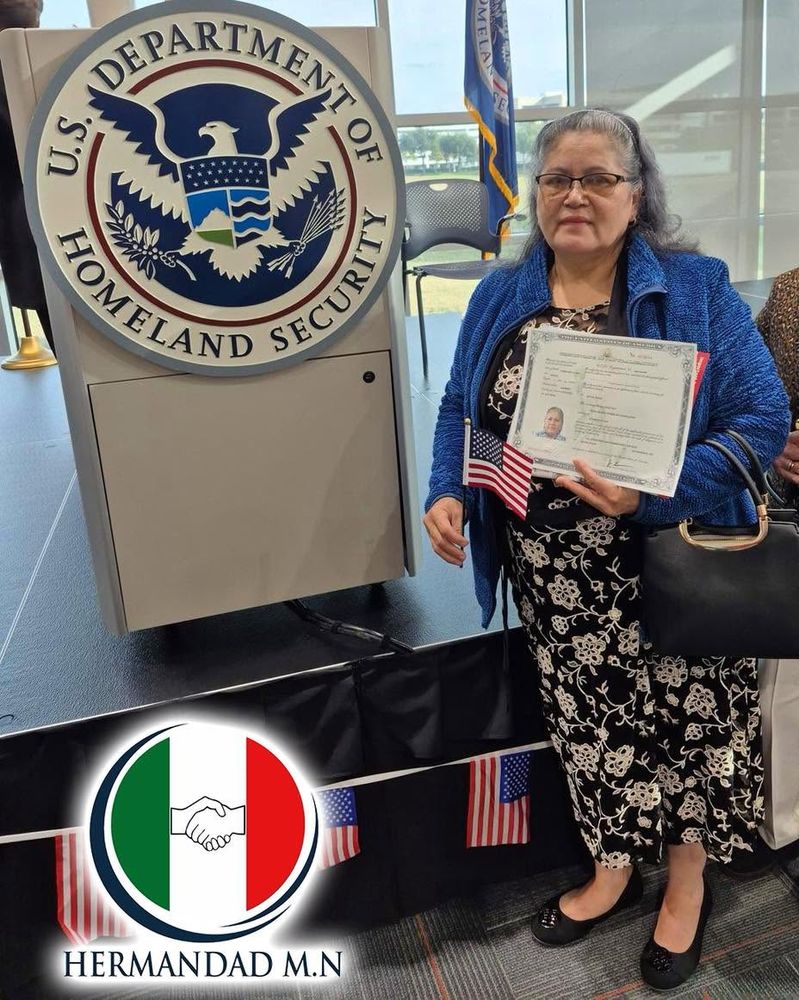
¿Qué es?
La naturalización es el camino para que un residente permanente se haga ciudadano de Estados Unidos. Se pide con el Formulario N-400, Solicitud de Naturalización, ante USCIS (Servicio de Ciudadanía e Inmigración de Estados Unidos). Si USCIS la aprueba, la persona se vuelve ciudadana el día que hace el Juramento de Lealtad en una ceremonia. Como ciudadano puede votar, sacar el pasaporte estadounidense y pedir a más familiares.
¿Quién puede solicitar?
En general, la persona debe:
- Tener 18 años o más.
- Tener 5 años o más como residente permanente (con green card). Son 3 años si está casado(a) con un ciudadano, vive con esa persona, su pareja ha sido ciudadana durante esos 3 años y siguen casados hasta el juramento.
- Residencia continua: haber vivido en EE. UU. esos 5 (o 3) años sin ausencias largas. Una salida de más de 6 meses puede romperla, y una de un año o más normalmente la rompe.
- Presencia física: haber estado dentro de EE. UU. por lo menos 30 meses de los últimos 5 años (o 18 meses de los últimos 3, con la regla de matrimonio).
- Haber vivido por lo menos 3 meses en el estado o distrito de USCIS donde presenta.
- Tener buen carácter moral (good moral character) durante ese tiempo y hasta el juramento.
- Saber inglés básico y civismo, que USCIS llama educación cívica (historia y gobierno de EE. UU.), salvo que tenga una excepción.
- Apoyar los principios de la Constitución de EE. UU. y hacer el Juramento de Lealtad.
Se puede presentar la N-400 hasta 90 días antes de cumplir los 5 (o 3) años como residente. Si se presenta antes de esos 90 días, USCIS puede negarla, y la cuota no se devuelve.
Servicio militar. Quienes sirven o sirvieron con honor en las Fuerzas Armadas de EE. UU. tienen reglas especiales: pueden necesitar menos tiempo de residencia, o ninguno si sirvieron en ciertos periodos de conflicto, y por lo general quedan exentos de la cuota.
Paso a paso
- Se prepara la N-400. Se contestan con cuidado todas las preguntas: domicilios, trabajos, viajes, matrimonios, hijos, impuestos y cualquier arresto. Algunas personas ya son ciudadanas por sus padres y no la necesitan (vea Certificado de ciudadanía).
- Se presenta y se paga. En línea, con una cuenta de USCIS, o en papel por correo. USCIS cobra una cuota. Si pide exención o cuota reducida, debe ser en papel. Vea Exención o reducción de cuotas.
- Llega el recibo. La notificación de recibo (Formulario I-797C), junto con su green card, extiende la validez de la tarjeta por 24 meses después de su vencimiento.
- Biométricos. Normalmente le citan en un Centro de Apoyo de Solicitudes (ASC) para tomar huellas, foto y firma, y así revisar sus antecedentes.
- Entrevista. Un oficial de USCIS repasa su N-400 con usted, bajo juramento, y le hace el examen de inglés y de civismo.
- Decisión. Al final le dan el Formulario N-652 (resultados de la entrevista). Ahí dice si el caso fue aprobado, si sigue pendiente (por ejemplo, si faltan documentos o debe repetir una parte del examen) o si fue negado.
- Juramento. La ceremonia puede ser el mismo día o en otra fecha. Antes de la ceremonia se llena el Formulario N-445 (preguntas sobre lo que ha pasado desde la entrevista) y un oficial lo revisa; luego se entrega la green card y se hace el Juramento de Lealtad. Desde ese momento es ciudadano.
- Certificado. Recibe su Certificado de Naturalización. Hay que revisarlo y avisar ahí mismo si tiene un error.
El examen de inglés y de civismo
- Inglés: el oficial ve si usted habla y entiende inglés durante la entrevista. Además, debe leer bien una de hasta tres oraciones y escribir bien una de hasta tres oraciones que le dictan.
- Civismo, examen de 2025: si presentó la N-400 el 20 de octubre de 2025 o después, le hacen preguntas en voz alta de una lista oficial de 128. Le pueden hacer hasta 20 y necesita 12 correctas. El examen termina al llegar a 12 correctas o a 9 incorrectas.
- Civismo, examen de 2008: si presentó antes de esa fecha, le hacen hasta 10 preguntas de una lista de 100, y necesita 6 correctas.
- Segunda oportunidad: si no pasa una parte, normalmente la repite entre 60 y 90 días después. Si no la pasa otra vez, USCIS niega la solicitud.
Nuestras clases de ciudadanía le ayudan a practicar.
Excepciones por edad o por discapacidad
- 50/20 y 55/15: si al presentar tiene 50 años o más y por lo menos 20 años como residente, o 55 años o más y por lo menos 15 años como residente, no hace el examen de inglés. El de civismo puede hacerlo en su idioma, con un intérprete que usted lleva.
- 65/20: si tiene 65 años o más y por lo menos 20 años como residente, además le hacen solo 10 preguntas de una lista especial de 20, y necesita 6 correctas.
- Discapacidad: si una discapacidad física, del desarrollo o mental le impide aprender inglés o civismo, un médico, osteópata o psicólogo clínico con licencia en EE. UU. puede llenar el Formulario N-648 (certificación médica para excepciones por discapacidad). USCIS lo revisa con mucho cuidado.
Lo que USCIS revisa de su historia
USCIS revisa su historia completa: arrestos y citaciones (aunque sean viejos o se hayan borrado del récord), impuestos y deudas con el IRS (Servicio de Impuestos Internos), manutención de hijos (child support), viajes fuera del país, si alguna vez dijo ser ciudadano, o se registró para votar o votó sin serlo, y, en el caso de los hombres, el registro en el Servicio Selectivo.
Desde 2025, USCIS revisa el buen carácter moral de forma más estricta: mira la conducta en general, no solo los delitos, y también lo positivo, como el trabajo y la familia. En algunos casos investiga en el vecindario y acepta cartas de recomendación. En noviembre de 2026, USCIS dio nuevas guías: también revisa si la persona ha mantenido a sus hijos y a otros dependientes, si ha cumplido sus compromisos como patrocinador (por ejemplo, con la I-864) y si ha obtenido beneficios públicos con engaños. Recibir beneficios públicos de forma legal no es, por sí solo, un impedimento, pero USCIS puede tomar en cuenta, por ejemplo, si alguien dejó de trabajar a propósito para seguir recibiéndolos. USCIS anunció que cambiará la N-400 para preguntar sobre esto. Estas guías siguen cambiando; llámenos para conocer la situación actual.
Errores comunes que debe evitar
- No declarar un viaje, un arresto o una citación porque parece poco importante. USCIS revisa los récords.
- Ir a la entrevista sin el resultado final, por escrito, de cada caso con la policía.
- Mandar un cheque o un giro postal. Desde octubre de 2025, USCIS en general solo acepta pagos con tarjeta (Formulario G-1450) o con débito de una cuenta de banco de EE. UU. (Formulario G-1650).
- Mudarse sin avisar a USCIS, o faltar a una cita.
- Pasar mucho tiempo fuera del país antes del juramento, o divorciarse antes del juramento si pidió con la regla de 3 años por matrimonio.
Después del juramento
Puede sacar su pasaporte con el Certificado de Naturalización original y una fotocopia (vea Pasaporte estadounidense), registrarse para votar y pedir a más familiares, como padres, hijos casados y hermanos. Para pedir a padres y hermanos, usted debe tener 21 años o más. Vea Peticiones familiares.
¿Cuánto tiempo tarda?
Depende de la oficina de USCIS y de su carga de trabajo. Puede ver los tiempos actuales desde la página Mientras mi caso está en trámite. Nadie puede garantizar una fecha.
Documentos que normalmente se piden
- Copia de su green card por los dos lados.
- Si pide por matrimonio: acta de matrimonio, prueba de que su pareja es ciudadana desde hace por lo menos 3 años, y pruebas de que viven juntos.
- Actas de divorcio o de defunción de matrimonios anteriores, si aplica.
- Por cada arresto, citación o cargo: el reporte y el documento con el resultado final.
- Si aplica: acuerdos de pago de impuestos, pruebas de pago de manutención, el Formulario N-648 o el N-426 (certificación de servicio militar).
- Cartas de recomendación, si quiere incluirlas (son voluntarias).
Preguntas frecuentes
¿Puedo hacer el examen en español?
Solo si tiene una excepción: la de edad (50/20, 55/15 o 65/20) o una excepción médica aprobada con el Formulario N-648. Con la de edad no hace el examen de inglés y puede hacer el de civismo en español, con un intérprete que usted lleva. Con cualquiera de las dos, la entrevista también puede ser en español con un intérprete. Sin excepción, la entrevista y los exámenes son en inglés.
Mi green card está por vencer. ¿Tengo que renovarla?
Si ya presentó la N-400, en general no: el recibo de la N-400 y su tarjeta prueban su residencia por 24 meses después del vencimiento. Si perdió la tarjeta o el recibo, normalmente se necesita la I-90. Vea Renovación de residencia.
¿Mis hijos se hacen ciudadanos conmigo?
Muchas veces, sí, si son menores de 18 años, solteros, residentes permanentes y viven en EE. UU. bajo su custodia legal y física. No presentan la N-400. Para tener la prueba, pueden sacar pasaporte o pedir el Certificado de Ciudadanía (N-600). Vea Certificado de ciudadanía.
Cómo le ayudamos
- Le explicamos cada requisito y cada paso en palabras sencillas.
- Le ayudamos a juntar y ordenar sus documentos.
- Preparamos y revisamos su N-400 y, si aplica, su solicitud de exención o de cuota reducida, y le ayudamos a enviarla y a dar seguimiento.
- Le preparamos para la entrevista con práctica de preguntas, lectura y escritura, y con nuestras clases de ciudadanía.
- Si tiene una excepción que permite usar intérprete, podemos interpretar en su entrevista donde se permite. Vea Intérprete para entrevistas.
Información oficial
What is it?
Naturalization is the path for a permanent resident to become a citizen of the United States. You apply with Form N-400, Application for Naturalization, filed with USCIS (U.S. Citizenship and Immigration Services). If USCIS approves it, the person becomes a citizen on the day they take the Oath of Allegiance at a ceremony. As a citizen, you can vote, get a U.S. passport and petition for more relatives.
Who can apply?
In general, the person must:
- Be 18 or older.
- Have 5 or more years as a permanent resident (green card holder). It is 3 years if you are married to a U.S. citizen, live with that person, your spouse has been a citizen for those 3 years, and you stay married until the oath.
- Continuous residence: have lived in the U.S. for those 5 (or 3) years without long absences. A trip of more than 6 months can break it, and one of a year or more usually breaks it.
- Physical presence: have been inside the U.S. for at least 30 months of the last 5 years (or 18 months of the last 3, under the marriage rule).
- Have lived at least 3 months in the state or USCIS district where you file.
- Have good moral character during that time and until the oath.
- Know basic English and civics (U.S. history and government), unless you have an exception.
- Support the principles of the U.S. Constitution and take the Oath of Allegiance.
You may file the N-400 up to 90 days before you reach 5 (or 3) years as a resident. If you file before that 90-day window, USCIS may deny it, and the fee is not refunded.
Military service. People who serve or served honorably in the U.S. Armed Forces have special rules: they may need less time as residents, or none if they served during certain periods of conflict, and they are generally exempt from the fee.
Step by step
- Prepare the N-400. Answer every question carefully: addresses, jobs, trips, marriages, children, taxes and any arrest. Some people are already citizens through their parents and do not need it (see Certificate of Citizenship).
- File and pay. Online, with a USCIS account, or on paper by mail. USCIS charges a fee. If you ask for a fee waiver or a reduced fee, you must file on paper. See Fee waiver or reduced fee.
- The receipt arrives. The receipt notice (Form I-797C), together with your green card, extends the card's validity for 24 months after it expires.
- Biometrics. You are usually scheduled at an Application Support Center (ASC) to give fingerprints, photo and signature, so your background can be checked.
- Interview. A USCIS officer goes over your N-400 with you, under oath, and gives you the English and civics tests.
- Decision. At the end you receive Form N-652 (interview results). It says whether the case was approved, is still pending (for example, if documents are missing or you must retake part of the test) or was denied.
- Oath. The ceremony may be the same day or on another date. Before the ceremony you fill out Form N-445 (questions about anything that has happened since the interview) and an officer reviews it; then you turn in your green card and take the Oath of Allegiance. From that moment you are a citizen.
- Certificate. You receive your Certificate of Naturalization. Check it and report any error right there.
The English and civics tests
- English: the officer checks whether you speak and understand English during the interview. You must also correctly read one of up to three sentences and correctly write one of up to three sentences read to you.
- Civics, 2025 test: if you filed the N-400 on or after October 20, 2025, you are asked questions out loud from an official list of 128. You may be asked up to 20 and you need 12 correct. The test ends when you reach 12 correct or 9 incorrect.
- Civics, 2008 test: if you filed before that date, you are asked up to 10 questions from a list of 100, and you need 6 correct.
- Second chance: if you do not pass a part, you usually retake it 60 to 90 days later. If you fail it again, USCIS denies the application.
Our citizenship classes help you practice.
Exceptions for age or disability
- 50/20 and 55/15: if, when you file, you are 50 or older with at least 20 years as a resident, or 55 or older with at least 15 years as a resident, you do not take the English test. You may take the civics test in your language, with an interpreter you bring.
- 65/20: if you are 65 or older with at least 20 years as a resident, you are also asked only 10 questions from a special list of 20, and you need 6 correct.
- Disability: if a physical, developmental or mental disability keeps you from learning English or civics, a doctor, osteopath or clinical psychologist licensed in the U.S. can fill out Form N-648 (medical certification for disability exceptions). USCIS reviews it very carefully.
What USCIS reviews in your history
USCIS reviews your whole history: arrests and citations (even old ones or ones removed from your record), taxes and debts with the IRS (Internal Revenue Service), child support, trips outside the country, whether you ever claimed to be a citizen, or registered to vote or voted without being one, and, for men, Selective Service registration.
Since 2025, USCIS reviews good moral character more strictly: it looks at your conduct in general, not just crimes, and also at the positive things, such as work and family. In some cases it investigates in the neighborhood and accepts letters of recommendation. In November 2026, USCIS issued new guidance: it also looks at whether the person has supported their children and other dependents, has kept their promises as a sponsor (for example, on Form I-864) and has obtained public benefits through fraud. Receiving public benefits lawfully is not, by itself, a bar, but USCIS may consider, for example, whether someone stopped working on purpose to keep receiving them. USCIS announced that it will change the N-400 to ask about this. This guidance keeps changing; call us to learn the current situation.
Common mistakes to avoid
- Leaving out a trip, an arrest or a citation because it seems unimportant. USCIS checks the records.
- Going to the interview without the written final result of each case with the police.
- Sending a check or money order. Since October 2025, USCIS generally accepts only card payments (Form G-1450) or debits from a U.S. bank account (Form G-1650).
- Moving without telling USCIS, or missing an appointment.
- Spending a long time outside the country before the oath, or divorcing before the oath if you applied under the 3-year marriage rule.
After the oath
You can get your passport with your original Certificate of Naturalization and a photocopy (see U.S. passport), register to vote and petition for more relatives, such as parents, married children and siblings. To petition for parents and siblings, you must be 21 or older. See Family petitions.
How long does it take?
It depends on the USCIS office and its workload. You can see current times from the page While My Case Is Pending. No one can guarantee a date.
Documents usually requested
- A copy of both sides of your green card.
- If you apply through marriage: marriage certificate, proof that your spouse has been a citizen for at least 3 years, and proof that you live together.
- Divorce or death certificates for earlier marriages, if any.
- For each arrest, citation or charge: the report and the document with the final result.
- If they apply: tax payment agreements, proof of child support payments, Form N-648 or Form N-426 (certification of military service).
- Letters of recommendation, if you want to include them (they are voluntary).
Frequently asked questions
Can I take the test in Spanish?
Only if you have an exception: the age exception (50/20, 55/15 or 65/20) or a medical exception approved through Form N-648. With the age exception you do not take the English test and you may take the civics test in Spanish, with an interpreter you bring. With either one, the interview can also be in Spanish with an interpreter. Without an exception, the interview and the tests are in English.
My green card is about to expire. Do I have to renew it?
If you already filed the N-400, generally no: the N-400 receipt and your card prove your residence for 24 months after the expiration date. If you lost the card or the receipt, the I-90 is usually needed. See Green card renewal.
Do my children become citizens with me?
Often, yes, if they are under 18, unmarried, permanent residents, and live in the U.S. in your legal and physical custody. They do not file the N-400. To have proof, they can get a passport or request a Certificate of Citizenship (N-600). See Certificate of Citizenship.
How we help
- We explain each requirement and each step in plain words.
- We help you gather and organize your documents.
- We prepare and review your N-400 and, if it applies, your fee waiver or reduced fee request, and we help you send it and follow up.
- We prepare you for the interview with practice questions, reading and writing, and with our citizenship classes.
- If you have an exception that allows an interpreter, we can interpret at your interview where allowed. See Interpreter for interviews.
Official information
La información de este sitio web es general y se ofrece con fines educativos. Puede no aplicarse a su situación, y las reglas migratorias cambian.The information on this website is general and offered for educational purposes. It may not apply to your situation, and immigration rules change.